Table of Contents
The rules of search are being rewritten — and not slowly.
If you’ve noticed your Google search results now open with a block of AI-generated text before you even see a single link, you’re watching the biggest shift in search behavior since mobile-first indexing. Businesses investing in the best SEO services are already asking the right question: how do we rank inside the AI answer, not just below it? That shift has a name: GEO — Generative Engine Optimization.
Whether you’re working with a best SEO services company or managing your digital presence in-house, understanding GEO is no longer optional. Every SEO agency in Chennai and beyond is being forced to rethink what “ranking” even means in 2026 — and the businesses that adapt now will own the visibility that others are about to lose.
What Is GEO, and Why Does It Matter?
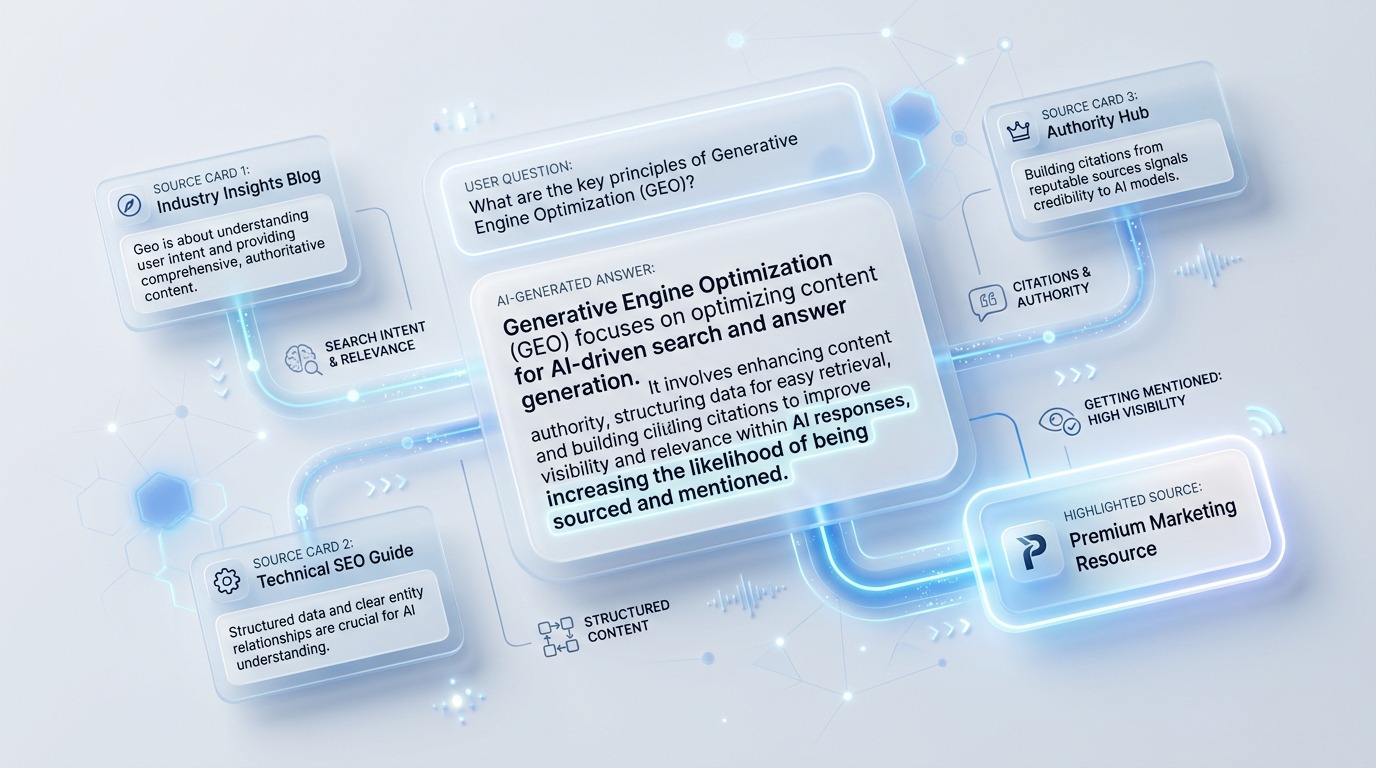
GEO stands for Generative Engine Optimization — the practice of structuring your content so that AI-powered search engines (Google’s AI Overviews, Perplexity, ChatGPT, Bing Copilot) pull from it when generating answers.
Traditional SEO got you ranked on Page 1. GEO gets you cited inside the answer itself — before the user even scrolls.
This is a fundamental change. Users are no longer clicking through ten blue links. They’re reading a synthesized response, and if your content isn’t part of that response, your brand doesn’t exist in that moment — regardless of your domain authority or keyword rankings.
For businesses investing in the best SEO services, this is the pivot point that separates forward-looking strategies from outdated ones.
How AI Search Engines Decide What to Include
AI-generated answers aren’t random. Models like Google’s Gemini and Perplexity’s AI pull from content that meets specific trust and structure signals:
Authoritative, factual writing
AI models favor content that makes clear, verifiable claims. Fluffy filler gets ignored. Specific data, named sources, and defined frameworks get cited.
Question-answer structure
Content that directly answers questions — using natural language that mirrors how people actually search — is far more likely to be included in AI overviews. Think headers framed as questions, concise paragraphs beneath them.
E-E-A-T signals (Experience, Expertise, Authoritativeness, Trustworthiness)
Google’s quality framework hasn’t disappeared — it’s been amplified. AI pulls from sources it deems credible. Author bios, original research, case studies, and transparent sourcing all feed into this.
Structured data and schema markup
AI engines parse structured data more efficiently. FAQ schema, How-To schema, and Article schema help AI understand what your content is about and where it fits in a broader query.
Brand mentions across the web
GEO rewards brands that exist beyond their own website. Getting mentioned — with or without a link — on relevant publications, forums, Reddit threads, and directories tells AI models that your brand is a recognized entity in the space.
GEO vs. Traditional SEO: What Changes, What Stays
The good news: GEO doesn’t replace SEO. It extends it.
Technical health, page speed, crawlability, and Core Web Vitals still matter. Keyword strategy still matters. What changes is the layer above — how content is framed, how deeply it answers intent, and how much of the web treats your brand as a legitimate source.
A strong SEO agency in Chennai working in 2026 isn’t just chasing rankings anymore. It’s building content ecosystems where every page, every blog post, and every landing page is optimized to be understood and cited by both human readers and AI systems.
The agencies still focused purely on keyword stuffing and backlink volume? They’re optimizing for a search engine that’s already changing beneath their feet.
Practical Steps to Optimize for GEO Right Now
If you want your content to appear inside AI-generated answers, here’s where to start:
- Rewrite your top pages to directly answer questions. Don’t bury the answer — put it in the first two sentences.
- Add FAQ sections with schema markup to every service and product page.
- Build topical authority by covering your niche comprehensively — not just one blog post, but a cluster of interconnected content.
- Earn brand mentions through PR, guest content, and community participation — not just backlinks.
- Update old content regularly. AI engines prefer recent, accurate information over evergreen content left to age.
- Use clear, declarative language. AI summarizes — give it sentences that summarize well on their own.
The Competitive Edge Is Still Up for Grabs
Most businesses haven’t made this shift yet. Most agencies haven’t either.
That window won’t stay open forever. Brands that work with a best SEO services company equipped to execute both traditional SEO and GEO strategy will compound their visibility — appearing in organic results and inside the AI answers that are replacing them.
The question isn’t whether GEO matters. The question is whether your current strategy accounts for it.
If it doesn’t — now is the time to fix that.